weighted blanket
Weighted blankets for anxiety and sleep: what the evidence says
We sift the research on weighted blankets for anxiety and sleep, look at why they feel soothing, and how to choose one safely.
Walk past the bedding aisle these days and it’s hard to miss them: heavy, quilted or chunky-knit blankets promising calmer nerves and deeper sleep. Sales have soared, and weighted blankets are now a staple of the wellbeing market. But what does the evidence actually say?
We’ve sifted the research so you can make an informed decision rather than a whim-driven one. The short version: the science is promising but far from settled, and whether one helps you may come down to personal taste more than anything else.
What is a weighted blanket?
A weighted blanket is a cover filled with materials - typically plastic pellets, glass microbeads or cotton - that make it noticeably heavier than a standard duvet. Most typically range from about 7 to 25 pounds (roughly 3 to 11 kg), according to the Sleep Foundation, with children’s and travel-sized models coming in lighter. Some newer designs use an open-knit construction that is more breathable.
The core idea is that the extra weight delivers a gentle, all-over pressure that some people find calming - a bit like the sensation of being firmly held.
What does the evidence actually say?
Let’s be honest about the state of the research. Even the Sleep Foundation - which sells the benefits of weighted blankets - warns that “not all advertised benefits are backed by strong scientific evidence” and that “research is still catching up,” even as people who use them report that the added weight helps with anxiety and, in some cases, eases insomnia.
What research does exist is mostly small and set in specific situations. A 2020 systematic review of weighted blanket use published in the American Journal of Occupational Therapy assessed the available studies and found the overall quality and strength of evidence to be limited. Several small studies have looked at weighted blankets in particular settings:
- During medical procedures. People receiving treatment in oncology infusion units, chemotherapy clinics and acutely injured trauma wards have reported feeling less anxious than those who didn’t use one. A small pilot in a psychiatric emergency department also hinted at lower anxiety, though these were preliminary findings.
- Around surgery. A multicentre randomised controlled trial of patients undergoing elective surgery found using a weighted blanket was associated with lower anxiety before the procedure, though it had no significant effect on pain.
- For sleep. One small study of healthy young adults observed that using a weighted blanket was linked to higher levels of the sleep hormone melatonin before bed - a hint that it may help some people wind down, but on a very small scale.
The big caveats matter. Most of these are small studies in particular medical environments, so the results don’t necessarily transfer to everyone using a weighted blanket at home for generalised anxiety or everyday insomnia. There is not yet robust, large-scale evidence showing that weighted blankets are an effective treatment for anxiety disorders or long-term sleep problems. Anything claiming to “cure” anxiety or insomnia with a blanket should be treated with healthy scepticism.
How might a weighted blanket help?
The most common explanation is that the weight provides a form of deep pressure stimulation - a firm, spread-out pressure across the body that some people find grounding and soothing. It’s the same principle behind weighted therapy items used in some occupational therapy settings, where a calm, held-in feeling can help reduce agitation.
That said, it’s important not to overstate this. Feeling physically held is comforting to many people, but relief is not guaranteed, and the evidence that deep pressure reliably reduces anxiety in everyone is limited. Think of a weighted blanket as a possible comfort aid rather than a treatment.
Who might find them helpful?
People who tend to feel calmed by firm touch, pressure or swaddling are the most likely to enjoy one. If gentle, weighty pressure sounds comforting to you, a weighted blanket may be worth trying. If the idea of a heavy cover leaves you feeling trapped or hot, it’s probably not for you - and that’s fine.
It’s also worth noting that most of the clinical research has involved adults, so the benefits for children are less well established.
How to choose one
If you’d like to try one, a few practical points can help you pick.
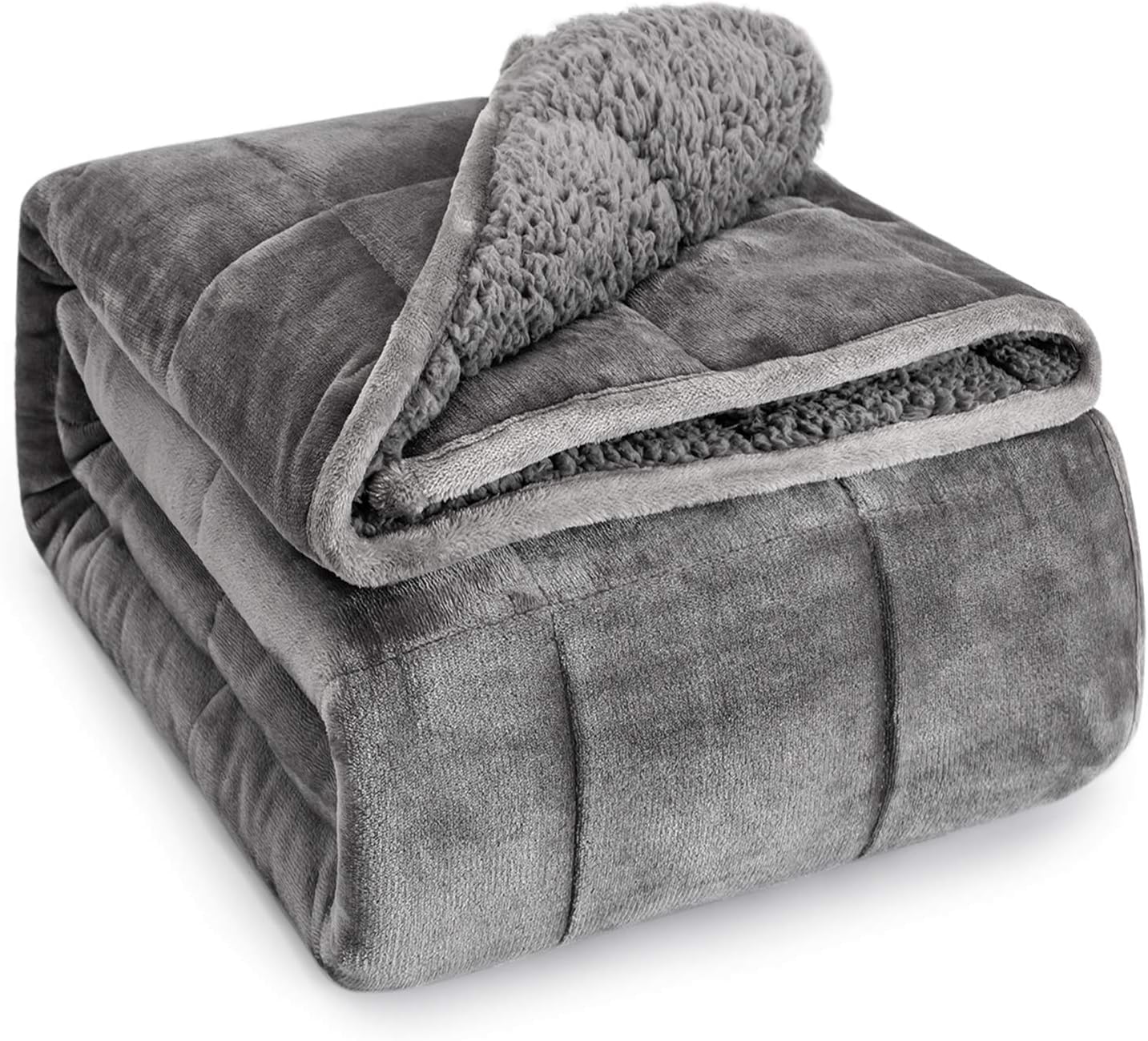
- Weight. As a rough guideline, the Sleep Foundation suggests choosing a blanket of about 10% of your body weight - calling it a “common rule of thumb” - while noting that comfort is personal and some people prefer a lighter or heavier option. In practice, that often means starting lighter than you’d think - and staying well within something you can easily move and get out from under.
- Size. Make sure it covers your body so the pressure is spread evenly, but isn’t so large it becomes unwieldy.
- Construction. Heavier fillings like pellets or microbeads provide dense pressure, while open-knit or fabric-based designs tend to be more breathable and cooler. If you sleep warm, breathability is worth thinking about.
- Care. Many weighted blankets are too heavy for a domestic washing machine, so check whether it has a removable, washable cover or needs professional cleaning.
- Budget. If you’re unsure whether you’ll like the feeling, look for a brand or retailer offering a generous trial or return window before committing.
A word on safety
Weighted blankets are generally low-risk for healthy adults, but they aren’t something to ignore. Because they press on the body, they can feel restrictive, and they may not be suitable for everyone.
If you have an underlying health condition - for example a breathing or circulation problem - or if you’re thinking about buying one for a young child, it’s worth checking with a GP or health professional first. Weighted blankets are not recommended for babies or very young children, and if you plan to use one with a child, getting professional advice is the sensible step.
The bottom line
Weighted blankets can be a genuinely cosy, calming addition to your wind-down routine, and plenty of people find the extra pressure soothing. But the scientific evidence for their effect on anxiety and sleep is mixed and limited, so go in with realistic expectations: treat one as a comfort aid that may or may not suit you, not as a fix for a health problem.
If anxiety or poor sleep is really interfering with your day-to-day life, speak to your GP. A weighted blanket is no substitute for proper medical - or mental health - support, but for many people it can be a pleasant extra layer of calm.