journaling
Journaling for a calmer mind - gratitude, reflection and simple ways to start
A gentle, beginner-friendly guide to journaling for mindfulness and gratitude - simple prompts to try, honest about the evidence, and when to see your GP.
If you’re reading this because your mind has felt a bit full lately, you’re in good company. Journaling is one of the simplest things you can try - a quiet page, a pen, a few minutes of your day. No fancy notebook, no special skill - just a gentle way to slow your thoughts and notice what’s actually going on.
This guide keeps things honest. Journaling isn’t a magic fix, and the science behind it is early and mixed - we say so plainly below. But for many people it’s a low-risk, comforting habit worth trying, and it earns its place alongside the things doctors and wellbeing experts actually recommend. Here’s how to start.
Why a short practice can help
Journaling and mindfulness are natural partners. The NHS describes mindfulness as paying attention to what is going on inside and outside ourselves, moment by moment - becoming more aware of our thoughts and feelings as they happen, rather than being swept along by them. A journal is simply a place where that noticing can happen on paper. When you pause to write “today felt heavy” or “that walk this morning was lovely”, you’re doing a small act of mindfulness: turning towards your present moment and giving it a name.
Gratitude pulls in the same direction. In the field of positive psychology, researchers have found that gratitude is strongly and consistently linked to greater happiness, and that it helps people refocus on what they have rather than what they lack.
There’s real texture to this. In one well-known 10-week study, people who spent a few minutes each week writing about things they were grateful for were more optimistic and felt better about their lives - and, unexpectedly, exercised more and visited the doctor less often than the group who wrote about daily irritations. In their research, the gratitude-journal group reported more positive emotions and more optimism than those who wrote about daily irritations.
The honest part you deserve to hear
Now the part many articles skip. Notice the word “reported” up there. A lot of the research on gratitude journaling is based on people describing how they feel - which is genuinely useful, but it isn’t the same as proof, and the results are far from settled.
For a start, many of the studies are small. Harvard Health is careful too, noting that studies of gratitude cannot prove cause and effect, and that most of the studies published on this topic support an association between gratitude and an individual’s well-being. The NHS says something similar even about mindfulness itself: studies show it can help with stress, anxiety and depression, but more research is needed, and it isn’t right for everyone - some people find it doesn’t help them, and a few find it makes them feel worse.
So please take this with you: the expected benefits are modest. Journaling is a gentle, low-risk habit that some people genuinely find helpful - it is not guaranteed to lower your anxiety, and it isn’t a treatment or a cure for anything. Think of it as a support act, not the headline. If you’re struggling, it belongs alongside professional help, not instead of it.
Three simple prompts to try
Keep it small. Here are three beginner-friendly approaches - try one for a week before adding others.
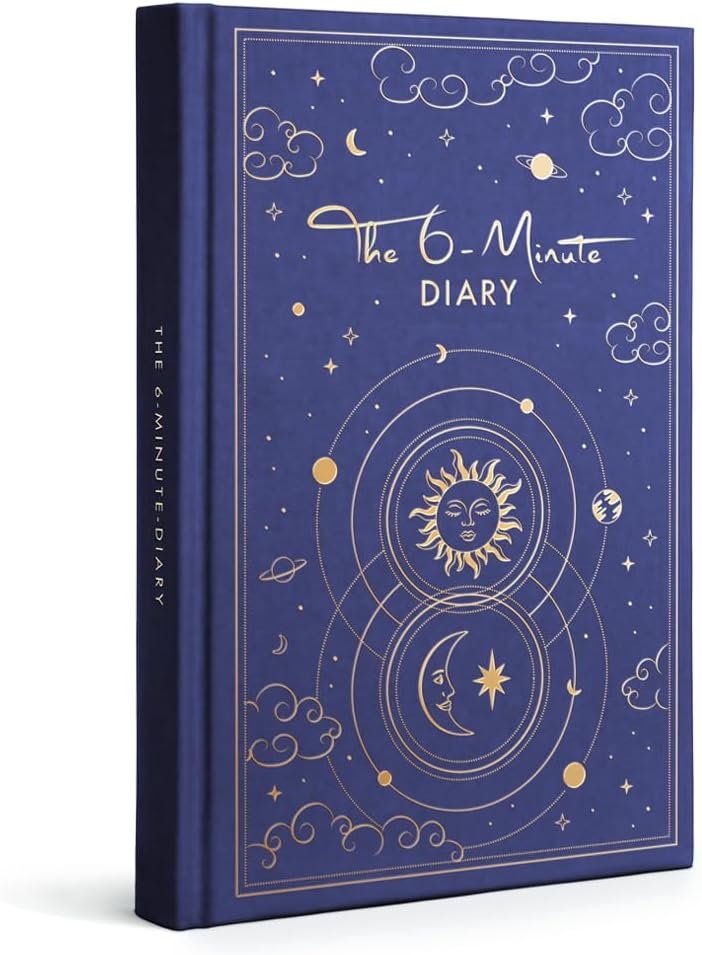
1. Three good things. Perhaps the best-known gratitude practice. Choose a number that feels manageable - even one line a day counts. The key, as gratitude specialists point out, is to be specific: instead of “the weather was nice”, try “the sun on my face at the bus stop this morning”. It can also help to notice where the good thing came from - a friend, a stranger, the world at large. Gratitude works by anchoring us to the good that’s actually there, not by pretending everything is perfect.
2. A feelings log. This one borrows from mindfulness itself. The NHS notes that some people find it helpful to name thoughts and feelings as they arise - for example “this is anxiety”, or simply “here’s the worry about tomorrow”. A feelings log is just that naming, on paper: a few words or sentences about how you’ve been feeling today, without judging yourself for it. Writing it down can help you spot your own patterns - what drains you, what lifts you.
3. A brain-dump. When your mind is racing with worries, sometimes the fastest way to calm it is to get them out of your head and onto the page. No tidy structure required - just write whatever is circling, messily if necessary. Naming worries on paper can help you see them as thoughts you’re having, rather than truths that run the show.
How to make it a habit
The golden rule is to make it embarrassingly small, so it’s easy to keep up.
- Pick a regular time. Tying journaling to something you already do - a few minutes with your morning tea, or in bed before sleep - makes it far more likely to stick.
- Start with two minutes. One or two lines beats a full page you never finish. You can always do more.
- Use anything. A spare notebook, a phone note app, a scrap of paper. The ritual matters more than the stationery.
- Expect it to feel awkward at first. That’s normal. Sustaining a daily gratitude practice can take real effort - it isn’t easy to redirect attention from what we lack. The NHS’s advice for mindfulness applies here too: this can be very hard at first, but with gentle persistence it becomes possible. You can also skip a day; the point is to come back, not to be perfect.
When a journal isn’t enough
Journaling works for some people and not others - the NHS is upfront that mindfulness, like most self-help approaches, is not right for everyone. If low mood, anxiety or worry has been hanging around for weeks, or is getting in the way of work, sleep or the things you enjoy, a notebook isn’t the answer by itself. Please don’t struggle alone: a good first step is to speak to your GP about what support is available. The NHS’s Every Mind Matters website also has free, personalised wellbeing ideas.
And if you ever feel unable to cope, that’s urgent - reach out for help straight away, whether to your GP, Samaritans on 116 123, or 111 out of hours. You deserve support, and it’s out there.
Start small - one line, one honest sentence, one page at a time. That’s all journaling asks of you today.